
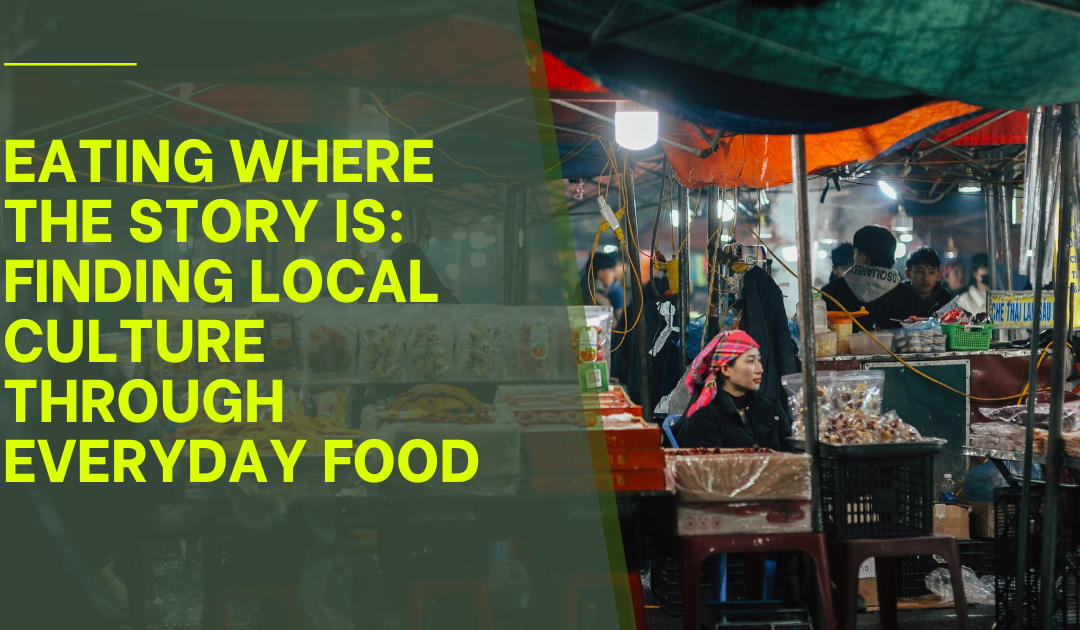
Travel guides often point visitors toward famous restaurants, carefully designed tasting menus, and dishes that have become symbols of a destination. But some of the most meaningful food experiences happen far away from the places featured on glossy travel lists. They happen in neighborhood cafés, family kitchens, local markets, roadside stalls, bakeries, and small restaurants where people eat as part of everyday life.
Food is more than something we consume while traveling. It can reveal how a community lives, what it values, and how its history has shaped the present.
Look Beyond the Famous Dish
Every destination has foods that visitors are encouraged to try. These dishes can certainly be worth experiencing, but stopping there can provide only a limited view of local culture.
Instead of asking, “What is the most famous food here?” try asking, “What do people who live here actually eat on an ordinary day?”
That question can lead somewhere much more interesting.
A simple breakfast from a neighborhood bakery may reveal local habits. A busy lunch counter can show how people structure their working day. A crowded market can introduce ingredients that rarely appear on tourist menus. Even a modest bowl of soup can carry generations of culinary knowledge.
Markets Are Cultural Windows
Local markets are among the best places to understand the connection between food and place.
Walking through a market reveals what grows nearby, what ingredients are considered essential, and what foods change with the seasons. Vendors often sell products connected to regional agriculture, fishing, farming, or traditional preparation methods.
Markets also reveal social relationships. Regular customers may know vendors by name. Families may shop together. Recipes and cooking advice may be exchanged casually.
For travelers, these small interactions can provide something a restaurant menu cannot: a glimpse into everyday life.
Follow the Ingredients
One way to discover a destination through food is to follow an ingredient rather than a restaurant.
Find out where a particular fruit, spice, grain, fish, or vegetable comes from. Ask how locals prepare it. Learn whether it has a seasonal role or connection to a particular region.
A single ingredient can tell a surprisingly complicated story.
Trade, migration, geography, colonial history, agriculture, and cultural exchange have all influenced the foods people eat today. What looks like an ordinary meal may actually represent generations of adaptation and interaction between different communities.
Eat Where People Gather
Restaurants are not the only places where food creates community.
Look for places where locals naturally gather: small cafés in the morning, food stalls during busy evenings, community markets, neighborhood bakeries, or casual lunch spots.
You do not necessarily need to find the most famous establishment. Sometimes the busiest ordinary-looking place offers a better window into local routines.
Observe how people order, what they share, when they arrive, and how long they stay. These details can reveal the social meaning of food.
Be Curious, Not Critical
Exploring local food also requires an open mind.
A dish may look unfamiliar, contain ingredients you have never tried, or be prepared differently from what you expect. Instead of immediately comparing it with food from home, ask questions.
Where did the recipe come from? Is it traditionally eaten during a particular season or celebration? Is there a story behind the preparation?
Approaching food with curiosity rather than judgment can transform a meal into a cultural experience.
The Best Souvenir Might Be a Recipe
Travel memories are often associated with landmarks and photographs, but food can create a different kind of connection.
You might remember a particular smell from a market, the sound of a busy neighborhood café, or a conversation with someone who explained how their family prepares a traditional dish.
Perhaps you return home with a recipe instead of a souvenir.
That is the real power of eating where the story is. Food does not simply introduce travelers to a destination’s flavors. It can introduce them to its people, history, routines, and relationships.
The next time you travel, consider putting the famous restaurant aside for one meal. Follow the locals, explore the market, order something unfamiliar, and ask where it came from.
You may discover that the most authentic story of a place is sitting right in front of you—on a plate.